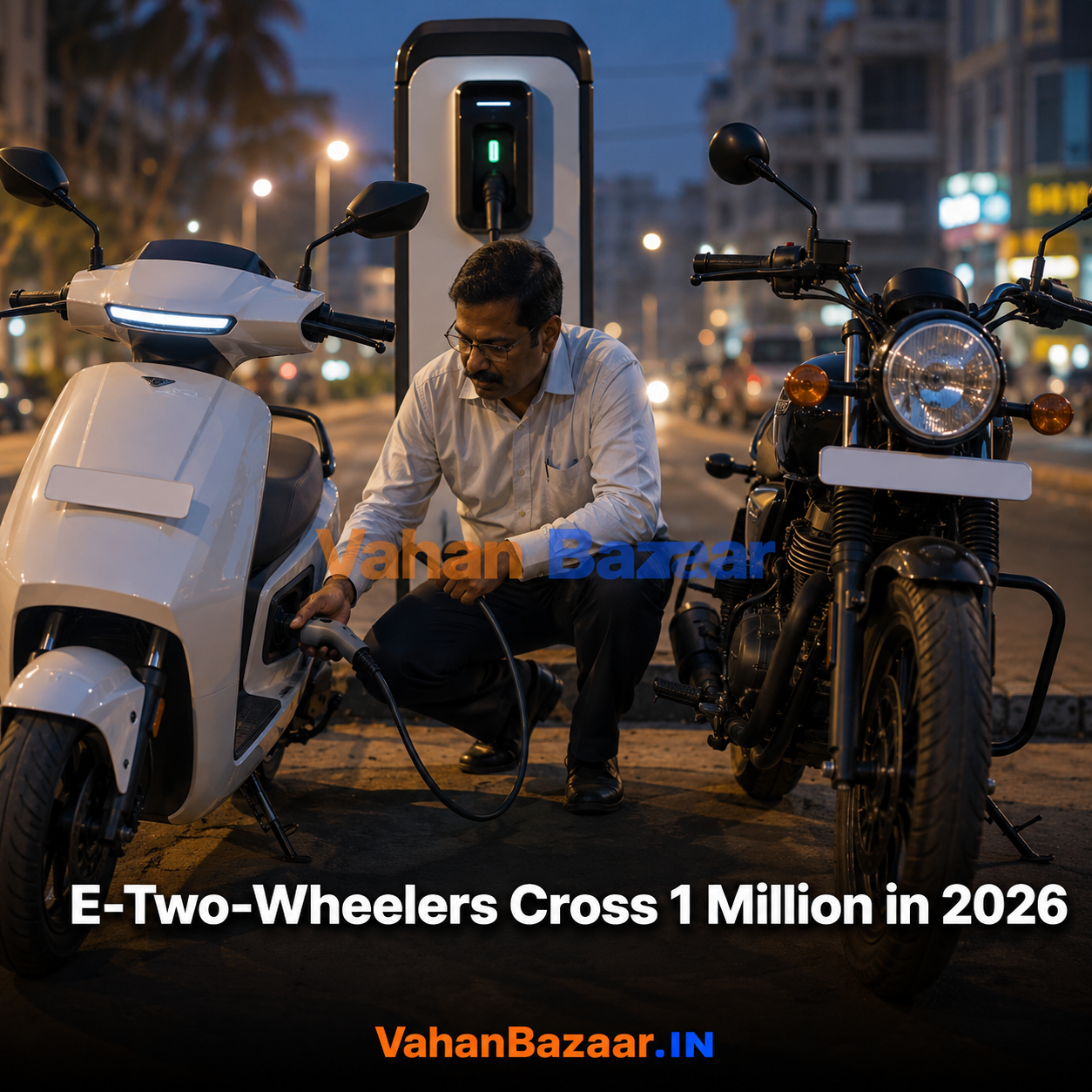
India's electric two-wheeler market passed a round number in early July 2026. Between the first of January and the sixth of July, 10,05,279 electric scooters, motorcycles and mopeds were sold, against 6,54,592 in the same period a year earlier. That is growth of roughly 54%, and it lifted electric vehicles to 8.17% of all two-wheelers sold in the country, up from around 6% across the whole of 2025.
Industry commentary has focused, reasonably enough, on whether the segment reaches two million for the full year. That is a question for manufacturers. For the far larger number of Indians who own a petrol motorcycle or scooter, or who are about to buy a used one, the more useful question is what a shift of this size does to the second-hand market they are actually transacting in.
The Honest Answer: Less Than the Headlines Suggest, So Far
It is worth starting with proportion. Electric two-wheelers are growing quickly from a small base and now represent something over eight percent of new sales. That means more than nine in ten two-wheelers sold in India this year still run on petrol, and the installed base on the road is overwhelmingly petrol by a margin that will take many years to shift materially.
Used vehicle values respond to the installed base and to demand from buyers, not to the growth rate of a new-sales category. A commuter motorcycle in a tier-two city is competing for a buyer who needs reliable, cheap transport now, and that buyer's alternatives are other used petrol bikes, not next year's electric sales figures. On present numbers there is no basis for the idea that used petrol two-wheelers are about to fall off a cliff.
Where the Shift Is Actually Visible
That said, the effect is not zero, and it is concentrated rather than general. The clearest pressure is on urban commuter scooters, because that is precisely the use case electric two-wheelers serve best: short, predictable city journeys, home charging, low running costs. A buyer in a metro choosing between a three-year-old petrol scooter and a new electric one now has a genuine comparison to make, and did not five years ago.
The pressure is much weaker on motorcycles bought for range, load or rough roads, and weaker again outside the largest cities, where charging is less convenient and the second-hand petrol market is deep and liquid. If you are holding a used commuter scooter in a metro, the competition for your buyer has increased. If you are holding a motorcycle in a smaller town, considerably less has changed.
Buying a used two-wheeler? Check the registered owner, loan status and pending challans against the registration number before you pay.
Fuel Prices Cut Both Ways
One driver frequently cited for the 2026 surge is the rise in petrol and CNG prices earlier in the year, which improved the running-cost case for electric two-wheelers at exactly the moment buyers were considering them. That is a real effect on new sales.
Its effect on the used market is more interesting and less discussed. Higher fuel prices raise the running cost of every petrol two-wheeler already on the road, which tends to increase demand for the most economical used models rather than reducing demand for used bikes generally. Buyers under cost pressure do not typically respond by purchasing a new electric vehicle at a higher upfront price. They respond by buying a cheaper, more economical used one.
The Buyer Question That Actually Costs Money
All of which points at where a used two-wheeler buyer's attention is best spent. The fuel-versus-electric question is worth thinking about, but it is a preference question with a fairly wide band of reasonable answers. The questions that reliably cost people money are documentary, and they apply identically to both.
Two-wheelers are financed heavily, sold informally, and transferred late or not at all. A used bike or scooter can carry an unremoved hypothecation entry from a loan settled years ago, a stack of camera-generated challans the seller genuinely does not know about, or a registered owner who is not the person taking your money. None of that is visible on inspection and all of it is visible in the record, for Rs 99.
On an electric two-wheeler there is one further item that has no petrol equivalent: the battery. It is the most expensive component by a wide margin, it degrades with age and charging habits, and a used electric scooter with an exhausted pack is not a cheap vehicle once a replacement is priced in. Establish the pack's age and current real-world range, and discount hard if the seller cannot answer clearly.
What This Means for Used Car Buyers and Sellers
For anyone buying a used two-wheeler, petrol or electric, the sequence is the same and it is short. Get the registration number from the listing photographs, run the record before you travel to see the vehicle, and read the registered owner, registration status, hypothecation entry and pending challans. Then inspect the vehicle against the record, comparing engine and chassis numbers character by character. Our guide to the fields that decide whether a used bike is safe to buy sets out what each one means.
For sellers of petrol two-wheelers, none of this is a reason for alarm, but it is a reason to present the vehicle properly. In a market where buyers are weighing more options than they used to, the seller who can show a clean record, no outstanding challans and no lingering loan entry is the one who holds their price. A verified listing at Rs 99 cross-verifies the vehicle against the government record and carries a Verified badge. On average, based on VahanBazaar listings data, verified listings receive around three times more buyer enquiries and typically sell about 40% faster.
An RC check costs Rs 99 and a challan check Rs 99, with both together at Rs 149 rather than Rs 198 separately. On a two-wheeler purchase of Rs 40,000 or Rs 80,000, that is a rounding error against the amount at risk, and it answers the questions that a test ride cannot.
Check Any Two-Wheeler Before You Pay
Registered owner, registration status, hypothecation entry and pending challans against the registration number, petrol or electric. RC check Rs 99. Add the challan position and take both for Rs 149 instead of Rs 198 separately.
List Verified — Rs 99Frequently Asked Questions
Between 1 January and 6 July 2026, 10,05,279 electric scooters, motorcycles and mopeds were sold in India, against 6,54,592 in the same period the previous year, which is growth of roughly 54%. That took electric vehicles to 8.17% of all two-wheelers sold in the country, up from around 6% across the whole of 2025. Industry expectations at the time pointed towards the segment approaching two million units for the full year.
Not dramatically on current numbers, and not evenly. More than nine in ten two-wheelers sold in India this year still run on petrol, and the installed base on the road is overwhelmingly petrol, so used values are set mainly by demand from buyers who need affordable transport now. The pressure is real but concentrated on urban commuter scooters in the largest cities, where electric vehicles compete most directly, and much weaker on motorcycles and in smaller towns.
It depends on your journeys and your charging situation rather than on market share figures. Electric suits short, predictable urban commutes with reliable home charging, while petrol remains more practical for longer distances, load carrying and places where charging is inconvenient. The more important point is that whichever you choose, the documentary checks are identical, and on a used electric vehicle you should additionally establish the battery pack's age and current real-world range.
The pack is the single most expensive component and it degrades with age and charging habits, so it deserves separate assessment. Ask how old it is, what range it currently delivers on a full charge compared with when it was new, and how it has typically been charged. If the seller cannot answer clearly, price a replacement into your offer, because a cheap used electric scooter with an exhausted pack stops being cheap as soon as that cost lands.
Run a check against the registration number, which is displayed publicly on the number plate, so you can do it before you travel to see the vehicle. On VahanBazaar an RC check costs Rs 99 and returns the registered owner, registration status and hypothecation position, while a pending challan check costs Rs 99, with both together at Rs 149 instead of Rs 198 separately. Then compare the engine and chassis numbers on the record against the vehicle itself.