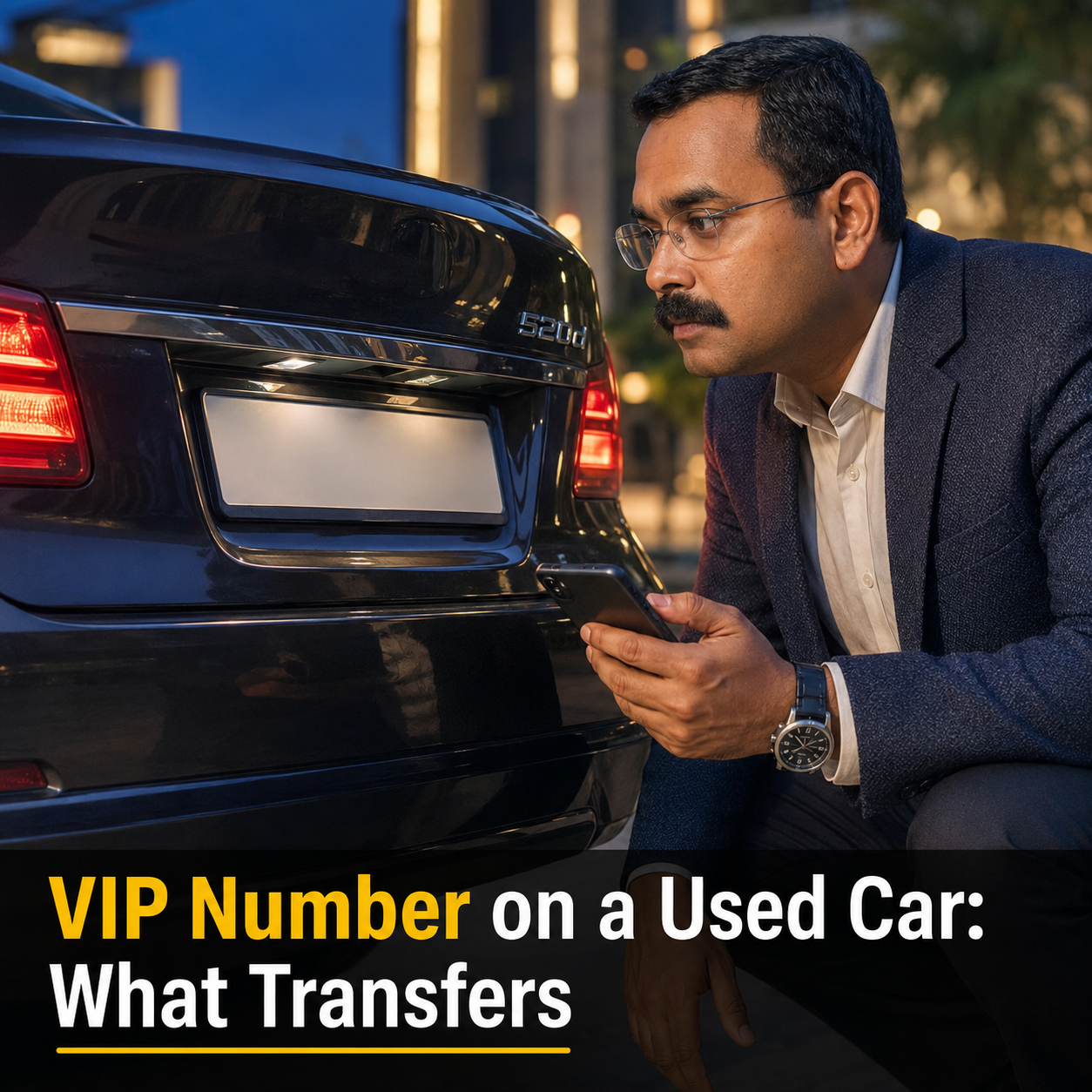
India's appetite for fancy registration numbers has moved from vanity to a genuine market. The numbers are allotted through the official Parivahan portal's Fancy Number Allocation module (vahan.parivahan.gov.in) — a transparent, online system that runs auctions or fixed-fee allotments depending on the state — and the money involved is no longer trivial. Base fees start at around Rs. 15,000, but elite single-digit and repeating numbers regularly cross Rs. 25 Lakh in official auctions in high-demand states, according to reported figures. One Noida registration with a Rs. 1 Lakh base price was reportedly auctioned for Rs. 27.5 Lakh. In Hyderabad, the coveted "0001" often crosses Rs. 5-10 Lakh, as per reports.
That inflation has crossed over into the used-car market. A car wearing "0001", "9999" or a clean single digit now carries a real premium in its asking price — sellers know what the number cost, and buyers are increasingly willing to pay for the shortcut. Which raises the question this article answers: when a VIP-plated used car changes hands, does the number actually come with the car? Usually yes — but there are three situations where it does not, and a buyer who pays a Lakh-plus premium without checking can end up owning the car and losing the plate.
As general practice, the registration number belongs to the vehicle — so on a normal same-state sale it transfers with the car on RC transfer. But the seller can retain it in several states, and an interstate move replaces it. State rules vary: confirm with the local RTO, and verify the car before paying any premium.
Why VIP Numbers Now Cost Real Money
The Fancy Number Allocation module on the Parivahan portal has done for registration numbers what online ticketing did for railway bookings: made the process transparent, competitive and open to anyone with an internet connection. Instead of opaque queues at the RTO counter, coveted numbers in auction states go to the highest online bidder, with base prices, bid histories and results published on the portal. In fixed-fee states, choice numbers are allotted at published rates. It is a clean system, and its very transparency is what has made prices public — and headlines like the reported Rs. 27.5 Lakh Noida result possible.
If you are starting from scratch — booking a fancy number for a new vehicle rather than buying one already on a car — the process, fees and state-wise differences are covered step by step in our fancy number plate booking guide. This article deals with the second-hand side: what happens to a number that is already riding on a used car.
Paying for a VIP plate? Confirm the number and the car with a Rs. 99 RC check first.
The Core Rule: The Number Belongs to the Vehicle
The rule of thumb that governs everything else is simple: the registration number is attached to the vehicle, not to the person. It is issued to the car at registration and, as general practice, stays with the car through its life in that state. Three scenarios follow from this rule — and state rules vary on the details, so treat what follows as the common pattern and confirm the specifics with your local RTO before a deal.
Scenario 1: A normal sale within the same state
This is the happy path. When the car is sold and the RC is transferred to the buyer's name at the RTO, the registration number — fancy or ordinary — transfers with the car. The buyer becomes the registered owner of the vehicle and, with it, the number. If the RC is clean and no retention application is in play, the premium a buyer pays for a VIP plate buys exactly what it appears to.
Scenario 2: The seller retains the number
Here is the wrinkle that catches buyers out. Several states allow the registered owner to apply for retention of the number before the sale, so they can carry their prized "0007" over to their next vehicle. Once retention is approved, the car being sold is issued a fresh, ordinary number — and the fancy plate goes with the seller, not the car. A buyer who agreed a price on the assumption the number was included has no claim on it. This is why the question "have you applied for number retention?" belongs in every negotiation over a VIP-plated car, alongside the other questions worth asking a used car seller before you commit.
Scenario 3: The car moves to another state
Registration numbers are state-series assets. When a vehicle is re-registered in a new state after a relocation, it is assigned a new number from the new state's series, and the original number goes back to the issuing authority. A Delhi "0001" does not become a Bengaluru "0001". If your plan is to buy the car in one state and register it in another, the fancy number is worth nothing to you — price the car as if it wore an ordinary plate.
What Happens to the Number: Four Scenarios at a Glance
| Scenario | What happens to the fancy number | Should a buyer pay a plate premium? |
|---|---|---|
| Normal sale, same state | Transfers with the car on RC transfer, as general practice | Yes — if the RC checks out and no retention is pending |
| Seller applies for retention before sale | Seller keeps the number for their next vehicle; car gets a fresh number | No — the plate is leaving with the seller |
| Interstate move and re-registration | New state issues a new number; the original lapses to the issuing authority | No — the number will not survive the move |
| Vehicle scrapped at end of life | Registration is cancelled; any retention of the number follows that state's rules | Not applicable — the number's fate depends on state policy |
Common pattern across states; retention windows, eligibility and fees differ by state. Confirm the current position with the local RTO before completing a transaction.
Before you pay a premium, confirm registration status, owner count and blacklist flags.
What This Means for Used Car Buyers
A VIP plate premium is only worth paying when two separate things are true: the number genuinely stays with the car, and the car underneath the number is worth buying. Skipping either check is how buyers overpay.
First, confirm the number actually stays
Check the RC status and confirm it is active in the seller's name. Ask the seller, in writing, whether any number retention application is pending or planned — and be wary of any deal where the seller is vague on this point. Fraudsters have already worked out that fancy-number premiums are easy money; we covered how bogus plate-and-transfer deals operate in our report on the fancy number RC transfer scam. If you intend to move the car interstate, remember the number will be replaced on re-registration — do not pay for what you cannot keep.
Second, verify the car itself
A glamorous plate is excellent camouflage for an ordinary — or problematic — car. Before paying a premium, check the owner count (a "first-owner" claim is verifiable, not a matter of trust), the registration validity, and above all whether the vehicle carries a blacklist flag. A blacklisted vehicle cannot be transferred at all until the flag is cleared — which means neither the car nor its precious number reaches your name. Our explainer on blacklisted used cars shows how often this surfaces only at the RTO counter, after money has moved.
This is precisely what Vahan Verify on VahanBazaar does for Rs. 99: enter the registration number and get the car's record from the official VAHAN database — registration status and validity, owner count, hypothecation and blacklist flags — in minutes, before any money changes hands. A separate Rs. 99 challan check shows pending traffic fines riding on the vehicle, which become your problem after transfer. Against a plate premium measured in Lakhs, Rs. 198 of verification is not caution; it is arithmetic.
Run the RC check, confirm no retention application is pending, and get the seller's written confirmation that the number transfers with the car. If any one of the three is missing, negotiate the price as if the car wore an ordinary plate.
The Bottom Line
Fancy numbers have graduated from RTO curiosity to a priced asset, thanks to the transparent auctions on the official Parivahan portal — and used cars wearing them now carry real premiums. The rule of thumb protects buyers who know it: the number belongs to the vehicle, so it transfers on a normal same-state sale, the seller can retain it in several states if they apply before selling, and it does not survive an interstate move. State rules vary, the RTO has the final word, and the premium is only worth paying when both the number and the car check out. The number you can see; the car's record you have to verify.
Verify Before You Pay the VIP Premium
A Rs. 99 Vahan Verify check pulls the car's record from the official VAHAN database — registration status, owner count, hypothecation and blacklist flags — before money changes hands. Add a Rs. 99 challan check to see pending fines. Two minutes of checking protects a premium measured in Lakhs.
Frequently Asked Questions
In most cases, yes. As general practice, the registration number belongs to the vehicle, not the owner. When a used car is sold within the same state and the RC is transferred to the buyer's name, the registration number — fancy or ordinary — stays with the car. However, state rules vary on retention and re-allotment, so confirm the position with your local RTO before treating the VIP number as a guaranteed part of the deal.
Several states allow the registered owner to apply for retention of the registration number before the vehicle is sold, so they can carry the fancy number over to their next vehicle. If a retention application has been made or approved, the car you are buying will be issued a fresh number after transfer — and the plate you paid a premium for goes back to the seller. Ask the seller directly whether retention has been applied for, and confirm the RC status before paying anything extra for the number.
The fancy number does not survive an interstate move. When a vehicle is re-registered in a new state, it is assigned a fresh registration number from that state's series, and the original number — however special — goes back to the issuing authority. If you are buying a VIP-plated car with the intention of relocating it to another state, do not pay a premium for the number, because it will not travel with you.
Fancy numbers are allotted through the official Parivahan portal's Fancy Number Allocation module (vahan.parivahan.gov.in), via transparent online auction or fixed-fee allotment depending on the state. Base fees start at around Rs. 15,000, but elite single-digit and repeating numbers regularly cross Rs. 25 Lakh in official auctions in high-demand states, according to reported figures. One Noida registration with a Rs. 1 Lakh base price was reportedly auctioned for Rs. 27.5 Lakh, and in Hyderabad the '0001' number often crosses Rs. 5-10 Lakh, as per reports.
Before paying a VIP premium, run a Rs. 99 Vahan Verify check on VahanBazaar. It pulls the car's record from the official VAHAN database — registration status and validity, owner count, and blacklist and hypothecation flags — so you can confirm the RC is clean and active before money changes hands. A separate Rs. 99 challan check shows pending traffic fines against the vehicle. Together they settle both halves of the question: the car and the number it carries.