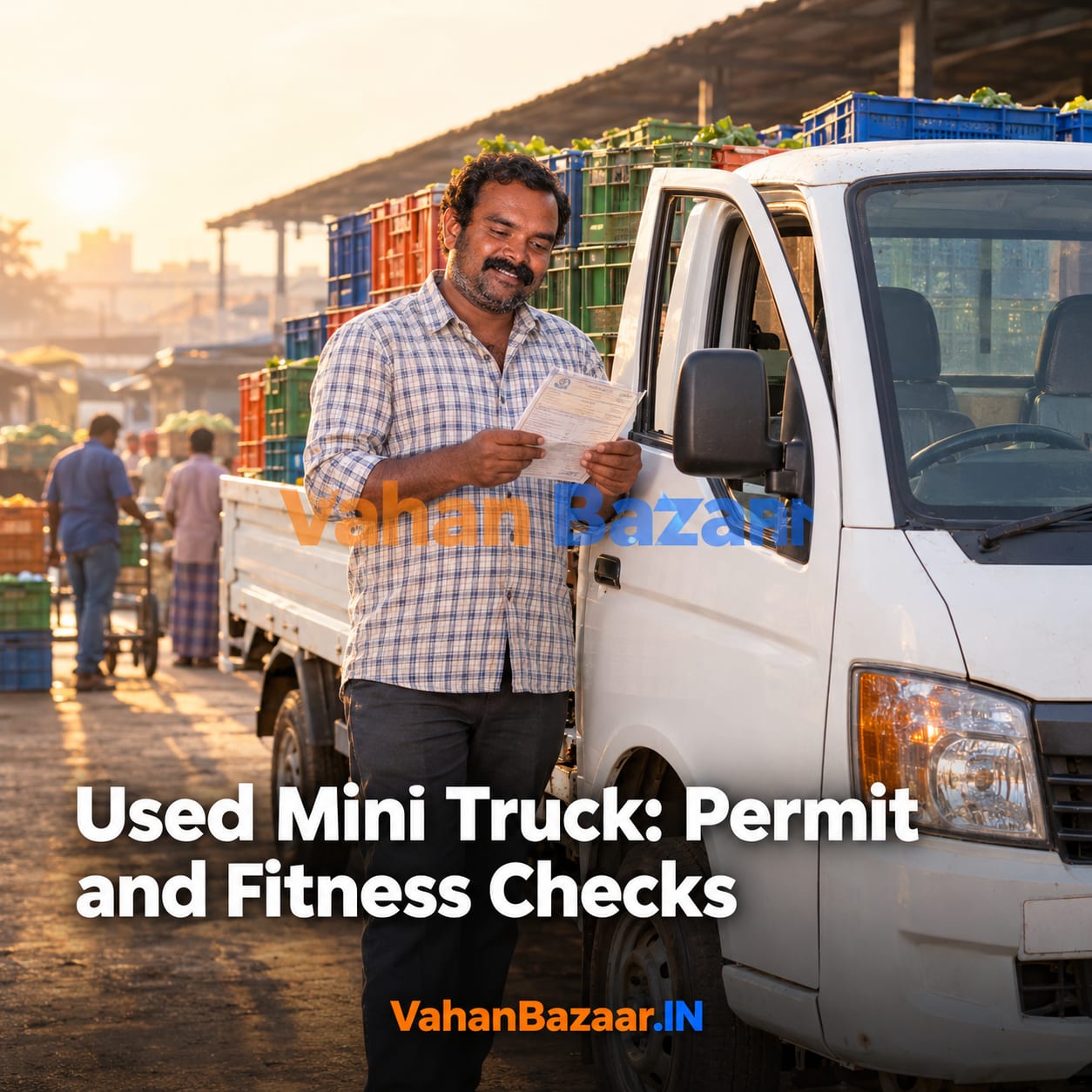
A used mini truck is not a car you drive to work. It is the work. A delivery van, a vegetable carrier or a small transport business earns money only on the days the vehicle is allowed to carry goods on the road. A wrong permit, or a fitness certificate that expired last month, can stop that earning on the first morning you own it.
This guide covers the Tata Ace range, the Mahindra Supro range and similar small goods carriers. It walks through the five papers to check before you pay: the permit, the fitness certificate, goods-carrier insurance, the loan position on the RC, and the real running cost. Every number below was checked against more than one public source. Where a figure came from one source only, we say so.
Why a Mini Truck Needs a Different Check
A private car is registered for personal use. A mini truck is registered as a goods carrier, and that registration sets what it may legally do. Two trucks of the same make and model can have very different rights on the road, depending on the permit they hold and the year they were first registered.
Most buyers check the engine, the tyres and the body dents. Those matter. But the papers decide whether the vehicle can earn at all, and the papers are where a used mini truck most often goes wrong.
Check the Permit First
The permit tells you where the truck may carry goods and what kind of goods it may carry. In general terms, there are two broad types you will meet when buying a used goods vehicle.
- State permit: the vehicle may carry goods within the state that issued the permit. Crossing into another state needs a different authority or permit.
- National permit: the vehicle may carry goods across state borders, within the terms of the permit.
Ask the seller for the permit certificate itself, not a verbal promise that it is valid. Note the issuing state, the type of permit, and the expiry date. Then check the same details against the VAHAN database using the registration number. A permit that expires next month is a cost you will pay immediately, not later.
A truck with a state permit for one state may look like a bargain. If your delivery route crosses a state line, that bargain can turn into a fine, a detour or a second permit fee. Match the permit to the route before you agree a price, not after.
Check the Fitness Certificate Against the Truck's Age
The fitness certificate, or FC, confirms that the vehicle is safe enough to be on the road. For commercial vehicles, the rule that matters most to a buyer is how often it must be renewed as the truck gets older.
Two public sources we checked describe the same rule. A commercial vehicle up to eight years old has a fitness certificate valid for two years at a time. Once the vehicle is older than eight years, the certificate must be renewed every year. Public guidance also notes that a valid fitness certificate is needed to renew a commercial permit, so an expired FC is not a small problem.
Work out the truck's age from its date of first registration, not from the year printed on the sales brochure. Then ask one simple question: when does the current certificate expire, and how many renewals will this truck need in the next two years? A truck bought at seven years old with an FC that runs out in a month is a cost you have to plan for on day one.
For a deeper look at what an expired certificate does to a sale or a transfer, read our guide on what an expired fitness certificate does to an RC transfer. The rules for older trucks are covered in our note on truck fitness fees.
Pull the Truck's Record Before You Pay
Registration date, registration status, hypothecation, insurance validity, owner serial number and blacklist flags, pulled from the VAHAN database against the registration number. Commercial vehicles included. RC check Rs. 99, or Rs. 149 with a challan check.
Goods-Carrier Insurance Is Not the Same as Car Insurance
A goods vehicle carries cargo, and that cargo is a liability. Before you buy, confirm three things with the policy document, not with the seller's word.
- The policy is in force today, and the end date is on the policy schedule.
- The vehicle is covered for goods-carrying use, not only private use. A policy written for a private vehicle may not cover a truck that is being used to earn.
- The policy is in the name of the registered owner, or a transfer is arranged on day one.
Ask what the policy covers for the goods you actually carry. A truck that hauls building material and one that carries fresh produce face different risks. Get the cover confirmed in writing before the first trip.
Check the Loan and the RC
Many used mini trucks are bought on a loan, and the lender's name often sits on the RC as a hypothecation charge. Until that charge is removed, the lender has a claim on the vehicle. The seller can say the loan is closed, but the RC shows the truth.
Ask the seller for the loan closure letter and the No Objection Certificate from the lender. Then confirm on the record that the hypothecation entry is gone. Repaying the loan and clearing the RC are two separate steps. If the second step was never done, the transfer stalls at the RTO, and you may be left with a truck you cannot register in your name.
Our guide on removing the financer name from an RC explains the paperwork involved. Do not pay the balance until the lender's position is clear on paper.
The current permit certificate, the current fitness certificate and the goods-carrier insurance policy. If any one is missing or expired, the price should reflect that, or the deal should wait until it is fixed.
The Specs That Set the Earning Power
Payload is the first number to compare. It is the weight of goods the truck can carry, and it decides how much you can earn per trip. Based on the public listings we checked:
| Model | Payload | Price reference | Source check |
|---|---|---|---|
| Tata Ace Gold Diesel | 750 kg | About Rs. 5.99 Lakh, ex-showroom | Single aggregator listing |
| Tata Ace Gold Plus | 900 kg | Range of about Rs. 4.50 to 6.69 Lakh, ex-showroom | Payload in two sources; price in one |
| Mahindra Supro Profit Truck Mini | 900 kg | About Rs. 5.27 to 5.62 Lakh, ex-showroom | Single aggregator listing |
| Mahindra Supro Profit Truck Maxi | 1,050 kg | About Rs. 5.99 to 6.72 Lakh, ex-showroom | Single aggregator listing |
Prices shown are new-vehicle ex-showroom references, not used prices. A used truck will sell for less, and the gap depends on its age, its condition and how many renewals it still needs. Use the table to compare payload per rupee, then price the used truck against its own papers.
The True Running Cost
The sticker price is the start of the cost, not the end. For a goods vehicle that earns a living, the running cost is what decides the monthly profit. Five items matter most.
Fitness and permit renewals
Add the fitness renewal every one or two years, and the permit renewal, to your yearly budget. Once the truck passes eight years, the fitness renewal becomes an annual cost. Plan for it from the day you buy.
Tyres
A loaded goods vehicle wears tyres faster than a car. Check the tread depth and the tyre manufacture dates on the sidewalls. Tyres that look fine can be too old to trust under load.
Mileage under load
Fuel use depends on the load, the road and the driver. Ask the seller for a fuel log if one exists, and do a short test run with a realistic load if you can. The number on a brochure is measured in ideal conditions.
Payload in practice
A truck rated for 900 kg that is regularly loaded to its limit wears out faster. Overloading also brings fines and insurance problems. Choose a payload that matches the goods you carry most days, not the one that sounds best.
Downtime
Every day the truck waits at a workshop or a checkpoint is a day without income. A cheap truck with a poor record can cost more in lost days than it saves at the price tag.
Permit, fitness certificate, insurance, the RC and the loan closure letter. When a checking officer or a renewal counter asks for any of them, you should be able to hand them over in under a minute.
A Simple Checklist Before You Buy
- Note the registration number from the plate and check it against the VAHAN database.
- Confirm the permit type, issuing state and expiry date match your route.
- Confirm the fitness certificate is valid today and count the renewals due in the next two years.
- Confirm goods-carrier insurance is in force and in the owner's name.
- Confirm the hypothecation entry is cleared, or make clearing it a condition of payment.
- Check the tyres, the payload rating and the mileage under a real load.
- Add the yearly running cost to the price before you decide.
What This Means for Sellers
If you are selling a mini truck, the same checks work in your favour. A buyer who can see a clean permit, a current fitness certificate and a cleared RC will pay with less haggling. Clear the hypothecation entry and renew the fitness certificate before you list, not after a buyer asks.
A Verified Listing on VahanBazaar checks the registration against the official record before it goes live. The listing fee is Rs. 99, and it is not free. Buyers can see that the registration position has already been checked.
The Short Version
A used mini truck earns only as long as its papers are in order. Check the permit against your route. Check the fitness certificate against the truck's age, and plan for yearly renewals once it passes eight years. Confirm goods-carrier insurance in the owner's name. Make sure the loan has been fully cleared from the RC. Then add tyres, mileage and downtime to the running cost before you decide.
The record check takes a few minutes and costs Rs. 99. Compared with a truck that cannot legally carry goods on day one, it is the cheapest part of the deal.
Frequently Asked Questions
Two public sources we checked describe the same rule. A commercial vehicle up to eight years old has a fitness certificate valid for two years at a time. Once it passes eight years, renewal is needed every year. Confirm the current rule with your RTO before you pay, because the rules for older vehicles have been changing.
A state permit covers goods carrying within the state that issued it. If your route crosses a state line, you need a permit that covers that route. Match the permit to where the truck will actually work before you buy.
Not always. A policy written for private use may not cover goods carrying. Read the policy schedule and confirm the use class, the end date and the owner name before the first trip.
Not necessarily. Closing the loan and removing the lender's name from the RC are two separate steps. Ask for the loan closure letter and the No Objection Certificate, and confirm on the record that the hypothecation entry is gone.