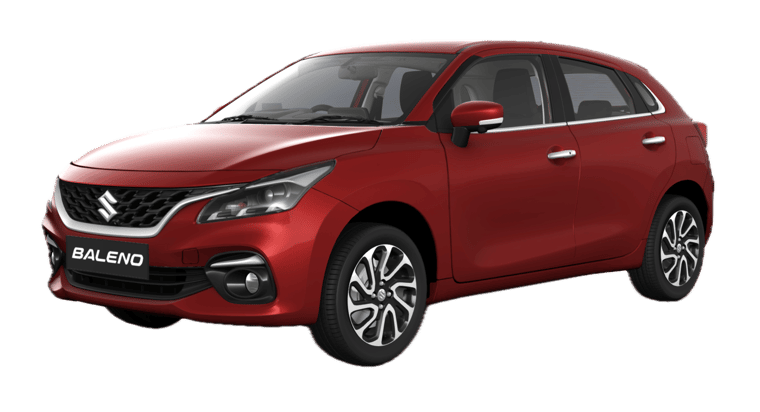
Baleno-specific inspection points. Take your phone to the dealer and use this as a checklist.
Dashboard rattling and creaking sounds
The 1st gen Baleno (2015-2019) is notorious for dashboard rattles, particularly from the passenger-side glovebox area and the center console. On rough roads, the entire dashboard can develop a persistent buzzing vibration. While individual rattles are fixable (₹500-1,500 at a service center), a car with multiple rattles suggests poor overall build quality that will keep returning. Test drive specifically on broken roads and speed breakers — if you hear more than one rattle source, the fix costs add up and the problem usually returns within months.
Repair: ₹500-1,500 per rattle point. Multiple rattles: ₹3,000-5,000+ and often recurring
CVT transmission judder at low speeds (pre-2022)
Some CVT-equipped Balenos develop a shudder or vibration when accelerating from standstill or during slow-speed parking manoeuvres. This indicates CVT fluid degradation or early belt wear. Maruti recommends CVT fluid change every 40,000 km, and many owners skip this. A CVT fluid flush (₹8,000-10,000) may fix it, but if the judder persists, the CVT unit itself needs replacement (₹60,000-80,000). Test the CVT specifically in stop-and-go traffic and during tight parking turns.
Repair: ₹8,000-10,000 for fluid flush. CVT unit replacement: ₹60,000-80,000
Check engine light with erratic idle (DualJet engine, 2019+)
The DualJet 1.2L engine on facelift and 2nd gen models can throw check engine lights due to faulty oxygen sensors or issues with the mild-hybrid SHVS system (integrated starter-generator). If the MIL light is on and the engine hunts at idle, get an OBD-II scan immediately. O2 sensor replacement is ₹3,000-5,000, but SHVS battery/ISG issues can cost ₹8,000-15,000. Any seller who refuses an OBD scan is hiding something.
Repair: ₹3,000-5,000 for O2 sensor. SHVS issues: ₹8,000-15,000
Structural rust on underbody and rear wheel arches
Like the Swift, the Baleno is prone to underbody rust, particularly around the rear wheel arches, door sills, and boot floor. This is more common on 2015-2019 models and in coastal or high-humidity cities (Mumbai, Chennai, Kochi, Kolkata). Get under the car or use a mirror — surface rust on bolts is normal, but flaking rust on structural panels or floor pans is a deal-breaker. Anti-rust coating was optional from factory and many owners skipped it.
Repair: ₹15,000-25,000 for underbody treatment and panel repair. Recurring in severe cases.
Paint quality issues on premium colours
Premium Baleno colours — particularly Nexa Blue, Pearl Arctic White, and Autumn Orange — are known to develop micro-scratches more easily and show swirl marks under direct sunlight. Some 2015-2019 models report clear coat peeling on the roof and bonnet after 4-5 years of outdoor parking. Silver and Grandeur Grey age much better. Inspect paint under direct sunlight, not in shade — swirl marks and clear coat failure are only visible in bright light.
Repair: ₹3,000-5,000 per panel for paint correction. Full body paint correction: ₹8,000-12,000. Respray: ₹15,000-25,000.
Suspension bottoming out on speed breakers
The Baleno has a softer suspension setup compared to the Swift, tuned for ride comfort over handling. While this means a smoother ride on highways, fully loaded Balenos (4 adults + luggage) tend to bottom out on large speed breakers and deep potholes. After 50,000 km, the rear shock absorbers often weaken noticeably. Not dangerous, but annoying — and a good negotiation point.
Repair: ₹4,000-6,000 for rear shock absorber pair. Full suspension refresh (all 4 corners): ₹10,000-15,000.
AC cooling performance in rear cabin
Despite having rear AC vents on Zeta and Alpha variants, the Baleno's rear cabin takes noticeably longer to cool compared to the front, especially in peak summer (40°C+). This is a design characteristic of the HVAC layout, not a defect. However, if the AC is weak even in front seats, check the refrigerant level and compressor condition — AC compressor failure is a known issue after 60,000 km.
Repair: ₹1,500-2,500 for gas top-up. AC compressor: ₹10,000-15,000 aftermarket, ₹22,000-28,000 genuine.
SmartPlay touchscreen lag and Bluetooth issues
The SmartPlay and SmartPlay Studio infotainment on 2019-2022 Balenos is known for occasional lag, slow boot times, and Bluetooth connectivity drops (especially with iPhones). A software update at a NEXA service center (₹500-1,000) usually helps. The 2022+ models with the new 9-inch SmartPlay Pro+ system are significantly better but can still have occasional Android Auto disconnection issues via wireless mode.
Repair: ₹500-1,000 for software update. Touchscreen replacement if unresponsive: ₹8,000-12,000.
Clutch feel inconsistency (manual variants)
Some manual Balenos develop a spongy or inconsistent clutch pedal feel after 40,000-50,000 km. This is usually due to air in the hydraulic clutch line or a weakening clutch master cylinder. A clutch bleed (₹500-800) fixes the spongy feel. If the clutch also slips under load (RPMs rise but speed doesn't), the clutch disc needs replacement.
Repair: ₹500-800 for clutch bleed. Clutch kit replacement: ₹4,500-7,000.
Interior plastic scratches on center console
The Baleno uses hard plastic on the center console and door armrests that shows scratches and scuff marks easily, especially in black interiors. This is cosmetic and universal on high-mileage Balenos. An interior detailing session (₹1,500-2,500) can improve the look significantly.
Headlight lens hazing (2015-2019)
The halogen headlight lenses on pre-facelift Balenos tend to yellow or haze after 3-4 years, reducing light output. LED-equipped models (Zeta/Alpha, 2019+) do not have this issue. Headlight restoration polish costs ₹500 per side.
Boot hinge squeaking
The boot lid hinges on the Baleno can develop a squeak after 3-4 years, especially if never lubricated. A quick application of white lithium grease (₹100-200 at any service center) fixes it permanently. Not a quality issue — normal maintenance item.
Slight wind noise above 100 km/h
The Baleno is better insulated than the Swift but still develops noticeable wind noise around the A-pillar area at highway speeds above 100 km/h. This is a design characteristic of hatchbacks in this segment, not a defect. Aftermarket sound deadening (₹5,000-8,000) can reduce it.
Minor brake disc scoring after 30,000 km
Light grooves on brake disc surfaces are normal after 30,000+ km. Only concerning if deep enough to catch your fingernail or if you feel vibration during braking. Disc replacement: ₹1,500-2,500 per disc. Pad replacement: ₹1,200-1,800 per set.