The Federation of Automobile Dealers Associations has published its retail data for July 2026, and the headline is a broad one: total vehicle retails rose 25.89 per cent year on year to 25,91,138 units, the highest figure ever recorded for the month of July. All six major vehicle categories posted their highest-ever July retail volumes. Two-wheelers grew 28.25 per cent to 18,18,289 units, the first time the segment has crossed 18 Lakh in a July, and passenger vehicle retails crossed 4 Lakh in a July for the first time.
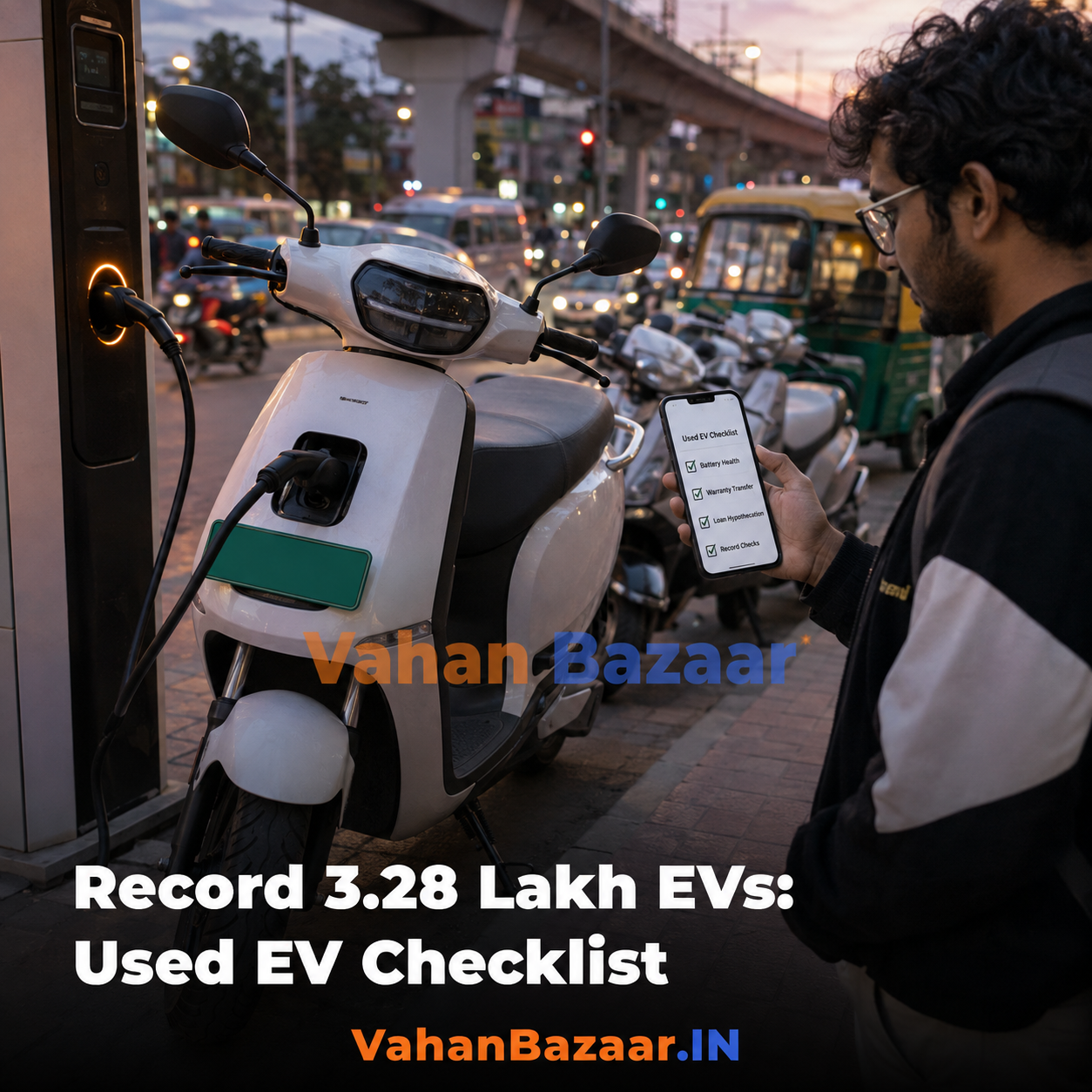
Buried inside that record month is the number this article is actually about. EV registrations across all categories reached 3,27,901 units — roughly 3.28 Lakh electric vehicles registered in a single month, an all-time high in FADA's retail data. Not a record for July. A record for any month, ever.
Unlike wholesale figures, which count vehicles dispatched from factories to dealers, FADA's numbers are registrations: vehicles that reached actual customers and went onto the VAHAN record in July. That distinction matters for what follows, because a registered vehicle is a vehicle with an owner, a finance history and, eventually, a resale.
The Record Month, Category by Category
The verified figures from FADA's July 2026 retail data, laid out side by side:
| Measure | July 2026 | What Makes It a Record |
|---|---|---|
| Total vehicle retails | 25,91,138 units, up 25.89% year on year | Highest ever recorded for the month of July |
| EV registrations, all categories | 3,27,901 units | All-time monthly high, any month |
| Two-wheeler retails | 18,18,289 units, up 28.25% | First July above 18 Lakh |
| Passenger vehicle retails | Crossed 4 Lakh | First time in a July |
| All six major categories | Growth across the board | Each posted its highest-ever July volume |
As for why the month was this strong, the explanations offered in FADA's commentary and the coverage around it are consistent: improved affordability after the GST reforms, easier vehicle financing, recovering rural demand and favourable festival timing all pulling in the same direction. None of those forces is specific to electric vehicles, which is partly the point — EVs set their record inside a month when everything sold well, meaning electric demand is now moving with the mainstream market rather than in its own niche. Central incentives under the PM E-Drive scheme continue to support electric two-wheelers and three-wheelers, which make up the bulk of those 3,27,901 registrations.
Why a New-EV Record Is a Used-EV Story
Here is the arithmetic nobody applies to a monthly registration record: every vehicle registered in July 2026 is a used vehicle of the near future. The first owner of an electric scooter in India typically holds it through a loan tenure of two to three years. Fleet and commercial vehicles turn over faster. Which means the 3.28 Lakh EVs registered last month are, on a fairly predictable schedule, the used EV supply of 2028 to 2030 — and the months before July were not small either.
Loan tenures and financing patterns mentioned here are indicative market observations, for information only — not financial advice. Speak to your bank or lender for terms that apply to you.
In fact, the used EV market is not a future event. It is already forming, in three distinct layers. Used electric scooters from the 2021 to 2023 first wave are on resale platforms and dealer lots in every metro. Used e-rickshaws and electric goods three-wheelers change hands constantly in the commercial market, often several times in a working life. And the first meaningful volumes of used electric cars are appearing as early adopters upgrade to newer models with bigger batteries.
The catch is that most of the people buying these vehicles second-hand are applying a used-petrol checklist to them. Kick the tyres, listen to the motor, check the odometer, negotiate. That checklist misses every one of the things that actually decides whether a used EV is a good buy.
How Used-EV Buying Differs from Used-Petrol Buying
A used EV is not a used petrol vehicle with a different fuel. The value sits in different places, the risks sit in different places, and the paperwork has a few extra layers. Five differences matter most.
1. The battery is the vehicle
In a petrol car, the engine's condition is one factor among many. In an EV, the battery pack is typically the single most expensive component by a wide margin, and its state of health decides both the real-world range you will get and the resale value you will pass on. Lithium batteries degrade with age, charge cycles and — critically for India — sustained heat, so two vehicles of identical age and odometer reading can carry very different battery values. Our guide to how Indian heat affects EV battery health explains what degradation looks like and how to test for it before you pay.
Range claims deserve their own scepticism. The figure a seller quotes is usually the certified ARAI range from the original spec sheet, and real-world range is reliably lower — city traffic, air-conditioning, load and battery age all take their share. If you are comparing listings, our explainer on reading an EV spec sheet covers what the kWh and range figures actually tell you, and what they do not.
2. The warranty may or may not come with it
Most EV batteries carry a long manufacturer warranty — often eight years on electric cars — and that warranty is a large part of what you are paying for in a used EV. But whether it transfers to a second owner depends entirely on the manufacturer's terms: some transfer automatically, some require registration of the new owner within a set window, and some clauses lapse on resale. Read the warranty document itself, not the seller's summary of it. Our breakdown of EV battery warranty terms in India lists the clauses to look for before agreeing a price.
3. Most EVs are financed, so hypothecation is the default
Electric two-wheelers and three-wheelers are overwhelmingly bought on loans, which means the registration record very often carries an active hypothecation entry — a financier's interest in the vehicle. Until that entry is removed with the financier's No Objection Certificate, ownership cannot transfer cleanly into your name. Sellers frequently do not realise the entry is still showing, because repaying the loan and removing the entry from the record are two separate events. The mechanics are the same as on any financed vehicle, and our hypothecation check explainer covers what to do when the entry appears.
4. Commercial electric three-wheelers add fitness and permit questions
A used e-rickshaw or electric goods carrier is a working asset, usually bought to earn from the day of purchase. On top of everything above, it carries a fitness certificate position and, depending on category and state, a permit position — and these decide whether the vehicle can legally work at all. A vehicle that cannot legally earn is not a bargain at any price. Our checklist for buying a used electric three-wheeler works through the commercial-specific items in order.
5. Insurance validity and transfer
Third-party insurance is a legal requirement on an EV exactly as on any other vehicle, and a policy left in the seller's name is of limited use to you if there is a claim. Establish that a valid policy exists, what it covers, and complete the transfer within the insurer's timeline after purchase.
None of the battery questions matter if the registration record itself has a problem. Before you inspect anything physical, confirm against the registration number that the vehicle's record is clean: registration status, registered owner, hypothecation entry and pending challans. A mismatch between the record and the seller's story is the clearest walk-away signal there is, and it costs Rs. 99 to find out.
What This Means for Used Car Buyers and Sellers
For buyers, the practical reading of July's record is that used EV supply is going to keep deepening from here, and the discipline that protects you does not change with the powertrain — it starts with the record, not the vehicle. Whether you are looking at a used electric scooter, an e-rickshaw or an electric car, pull the VAHAN record against the registration number before you travel to see it, before the test ride, and certainly before any money moves. The registered owner and hypothecation position matter more on EVs than on most vehicles, precisely because most EVs are financed. An RC check on VahanBazaar costs Rs. 99, a pending challan check costs Rs. 99, and both together cost Rs. 149 rather than Rs. 198 separately. Against the price of even the cheapest used e-scooter, that is nothing; against the cost of discovering an active loan after you have paid, it is everything.
For sellers holding an EV, the same data cuts the other way. With 3,27,901 EVs registered in July alone, the used EV market's supply side is set to grow quickly, and a listing that answers the buyer's hardest questions up front is the one that gets the enquiry. A verified listing at Rs. 99 cross-verifies your vehicle against the government record and carries a Verified badge that every buyer sees — which matters doubly in a young market where buyers are still nervous about being the second owner of a technology they do not fully understand. On average, based on VahanBazaar listings data, verified listings receive around three times more buyer enquiries and typically sell about 40% faster.
For context on how July's records ran across the rest of the market, the wholesale side of the same month told a parallel story — we covered the record two-wheeler and three-wheeler dispatches and what they mean for used bike supply. And July's EV record did not come from nowhere: electric car registrations had already doubled in June, part of a steady climb in EV penetration through the first half of 2026.
Selling an Electric Vehicle? List It Verified
A verified listing cross-checks your EV against the government record and carries the Verified badge buyers look for in a market where trust is still being built. Rs. 99, one-time.
List Verified — Rs. 99 Buying Instead? Check the RecordFrequently Asked Questions
According to FADA's July 2026 retail data, EV registrations across all vehicle categories reached 3,27,901 units, an all-time monthly high. This came within a record overall month: total vehicle retails rose 25.89 per cent year on year to 25,91,138 units, the highest ever recorded for the month of July, with all six major vehicle categories posting their highest-ever July retail volumes.
The registration record checks are the same, but a used EV adds battery-specific questions on top. The battery is the single most valuable component, so its health and the transferability of its warranty to a second owner matter more than anything mechanical. Most EVs are financed, so an active hypothecation entry is common. A commercially used electric three-wheeler also carries fitness and permit questions. The record checks still come first: registration status, registered owner, hypothecation and pending challans against the registration number.
It depends entirely on the manufacturer's warranty terms. Some warranties transfer to a subsequent owner automatically, some require the transfer to be registered with the manufacturer within a set period, and some clauses lapse on resale. Because the battery is the most expensive part of the vehicle, read the actual warranty document before agreeing a price rather than relying on the seller's summary of it.
On top of the standard checks — registration status, registered owner, hypothecation entry and pending challans — a commercially used electric three-wheeler needs its fitness certificate position and permit position established, because these decide whether the vehicle can legally earn. Battery condition matters doubly on a working vehicle, since a degraded pack directly cuts daily earning hours.
Yes, before any money changes hands. An RC check on VahanBazaar costs Rs. 99 and returns the registered owner and hypothecation position against the registration number, which matters on EVs because most are financed. A pending challan check costs Rs. 99, and both together cost Rs. 149 rather than Rs. 198 separately. The check runs on the registration number alone, so it can be done from the listing before you travel to see the vehicle.